November 24, 2026
How Photography Changed Floral Documentation
By @stemjournal22
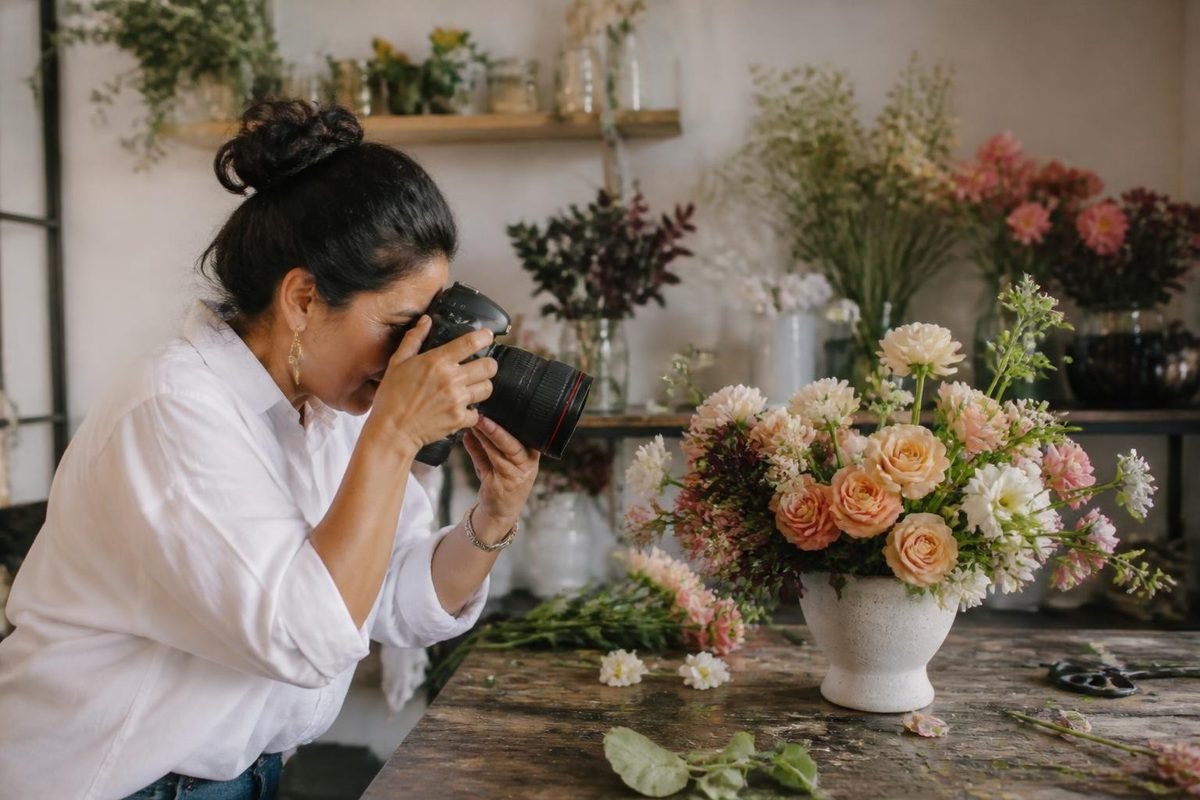
Photography made it possible to record a floral arrangement as it looked at a particular moment, even after the flowers faded. It gave florists, designers and historians a visual record they could keep, compare and share.
From written descriptions to pictures
Before photography, an arrangement could be described in words or depicted in a drawing or painting. Those records could show useful details, but an artist or writer chose what to include and how to represent it.
A photograph offered another kind of record. It could capture the shapes of flowers, the placement of stems and the relationship between an arrangement and its container in a single image. A viewer could return to that image long after the original work had disappeared.
Early photographs had limits. Black and white images could not show the colors of the flowers, and the photographic processes available at the time affected how a scene was recorded. Even so, they preserved details that might otherwise have been difficult to describe.
Keeping a record of temporary work
Flowers change quickly. Petals open, stems bend and leaves lose their freshness. A photograph lets a maker document an arrangement before those changes take place.
That record can be useful for a wedding, an exhibition or a piece made for a particular room. It can show the scale of the work, the shape of its outline and the way it was placed in its setting. A series of photographs can also show an arrangement from different sides or at different stages.
For florists, photographs can serve as a record of past work and a starting point for discussing a new design. They cannot guarantee that the same flowers will be available or that a new arrangement will look exactly the same.
Sharing ideas and studying design
Photographs made arrangements easier to share with people who could not see them in person. Printed images could appear in books, magazines and other publications, allowing readers to study designs made elsewhere.
Color photography added information that black and white images could not provide. Readers could see how flower colors worked together and how foliage contributed to the whole. Digital photography later made it easier to take, store and share many images of one arrangement.
These records also help people study changes in floral design. Photographs can reveal preferred shapes, containers and settings, though they show only the arrangements that someone chose to photograph and preserve.
What a photograph can and cannot show
A photograph is helpful, but it is not a complete substitute for the arrangement. Lighting and camera settings can change how colors appear. A single view may hide stems or flowers behind the front of the design.
It also cannot convey scent or show exactly how the flowers feel. Notes about the materials, size and date can make a photo more useful, especially when the image is kept as a long term record.
Questions about floral photographs
Why photograph an arrangement from more than one side?
Several views can show its depth and reveal details hidden in a single image.
Did photography replace drawings of flowers?
No. Drawings and photographs can serve different purposes and emphasize different details.
Can a photograph show the exact flower colors?
Not always. Light, camera settings and the screen or print can affect their appearance.
On the same subject: Polish life in Vienna
❧